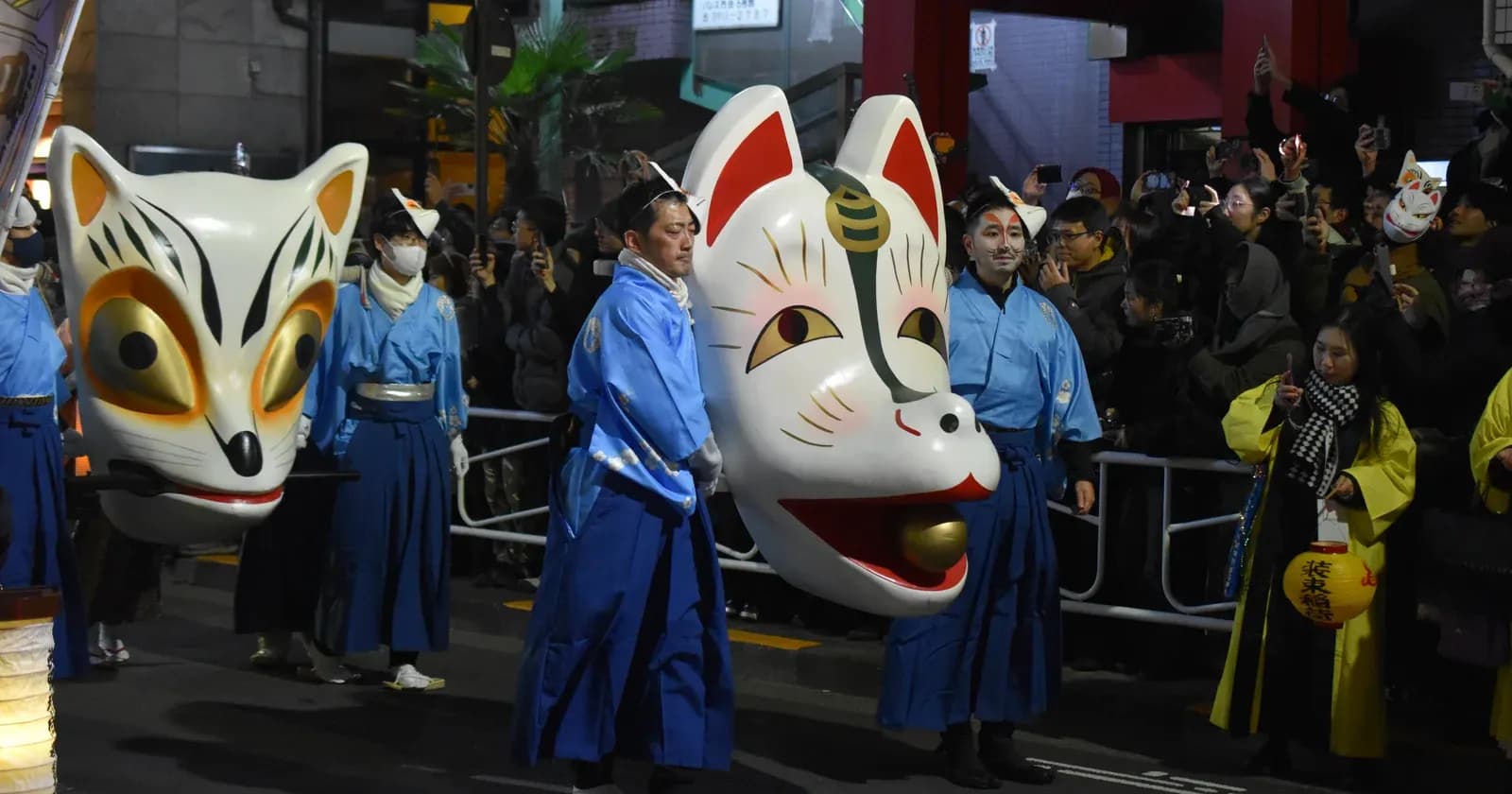
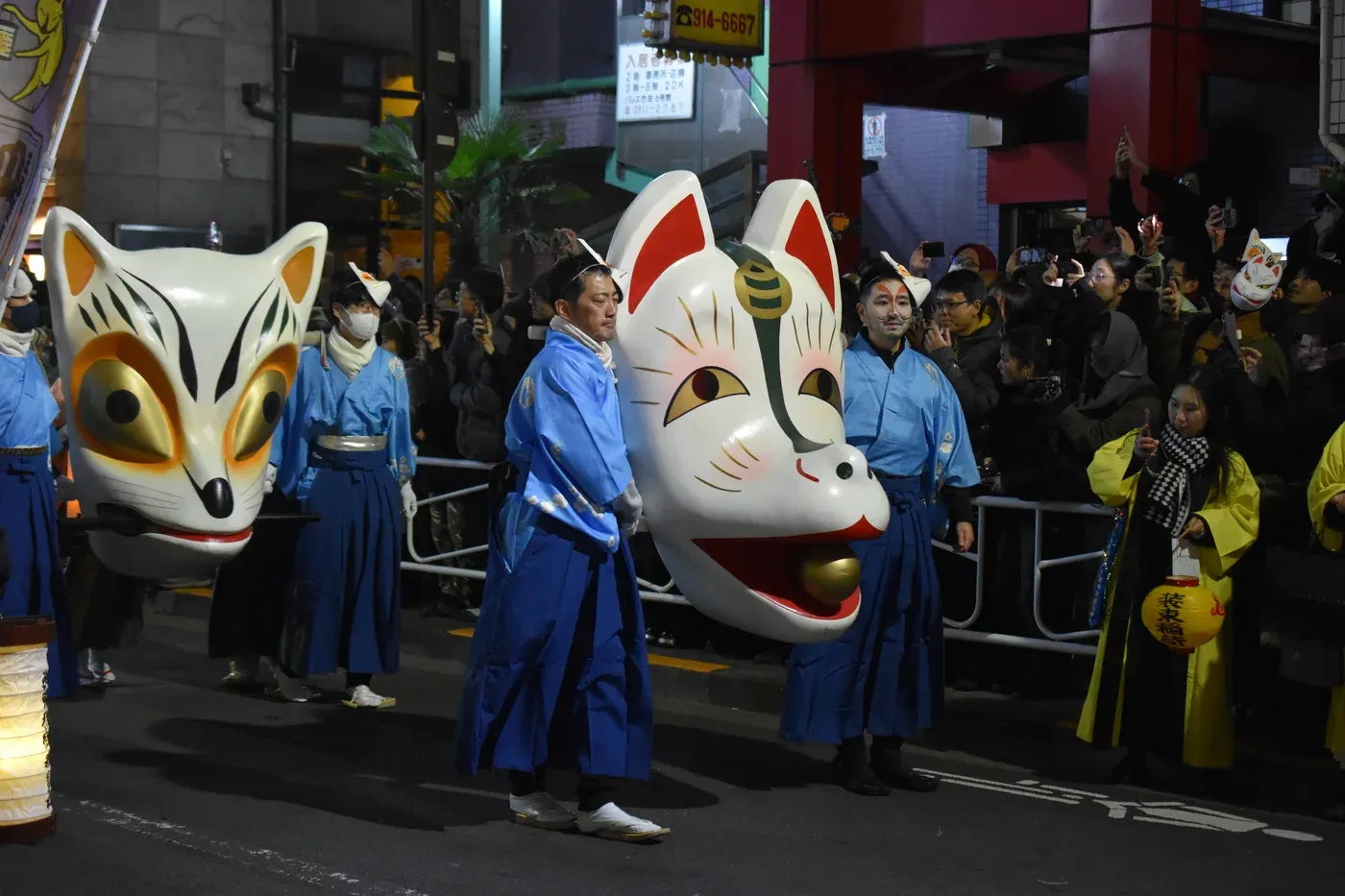
The Oji Fox Parade, January 1, 2025. Photo by Fred Cherrygarden, Wikimedia Commons, CC BY-SA 4.0, cropped
The December Calendar for Tokyo’s Illuminations and Historic Fairs
Updated: November 13, 2026
11 Locations
14 min read
By early December, Tokyo trades its last autumn maples for winter illuminations, even as neighborhood shrines quietly start hanging lanterns for the year-end markets.
Within a single week, you can browse a street market whose roots go back to 1578, walk beneath the lit street trees of Marunouchi, and watch Saturday fireworks over Odaiba Bay.
Between that final week of foliage and the year-end museum closures starting around December 21, the city compresses its brightest seasonal spectacles and oldest purification rituals into a tight three-week window.
Because so much happens on fixed dates, when you arrive dictates what you will experience. A few windows already require action. Rikugien’s night illumination tickets are on sale now, and the lottery for Tokyo Skytree’s New Year’s Day sunrise closes November 26. Below is the month laid out chronologically, covering what each event offers and what you need to book ahead.
Matching Your December Dates to the Right Tokyo Experience
For Late Foliage and Quiet Gardens (December 1 to 6):
Aim for the very first week of the month. This is your narrow overlap to catch illuminated crimson maples at Rikugien and walk the Imperial Palace’s Inui-dori avenue before winter strips the trees. The major Christmas light displays are already switched on.
For Historic Temple Fairs and Winter Lights at Full Tilt (December 12 to 19):
The middle of the month delivers the richest cultural mix. You can spend your afternoons at the old year-end fairs, from Sengakuji’s samurai memorial to Setagaya Boro-ichi and Asakusa’s Hagoita-ichi. Your evenings belong to the winter illuminations in Marunouchi, or to the Saturday fireworks over Odaiba Bay.
For Year-End Rituals and New Year’s Eve (December 26 to 31):
Arrive in the final week if you want to experience the ritual buildup to Oshogatsu (Japanese New Year). While major museums and gardens begin shuttering for the holidays, a neighborhood temple holds the last year-end fair, and December 31 brings temple bells, a bayfront countdown and the folklore-inspired Oji Fox Parade.
Catching the Final Illuminated Maples at Rikugien and the Imperial Palace Through December 6
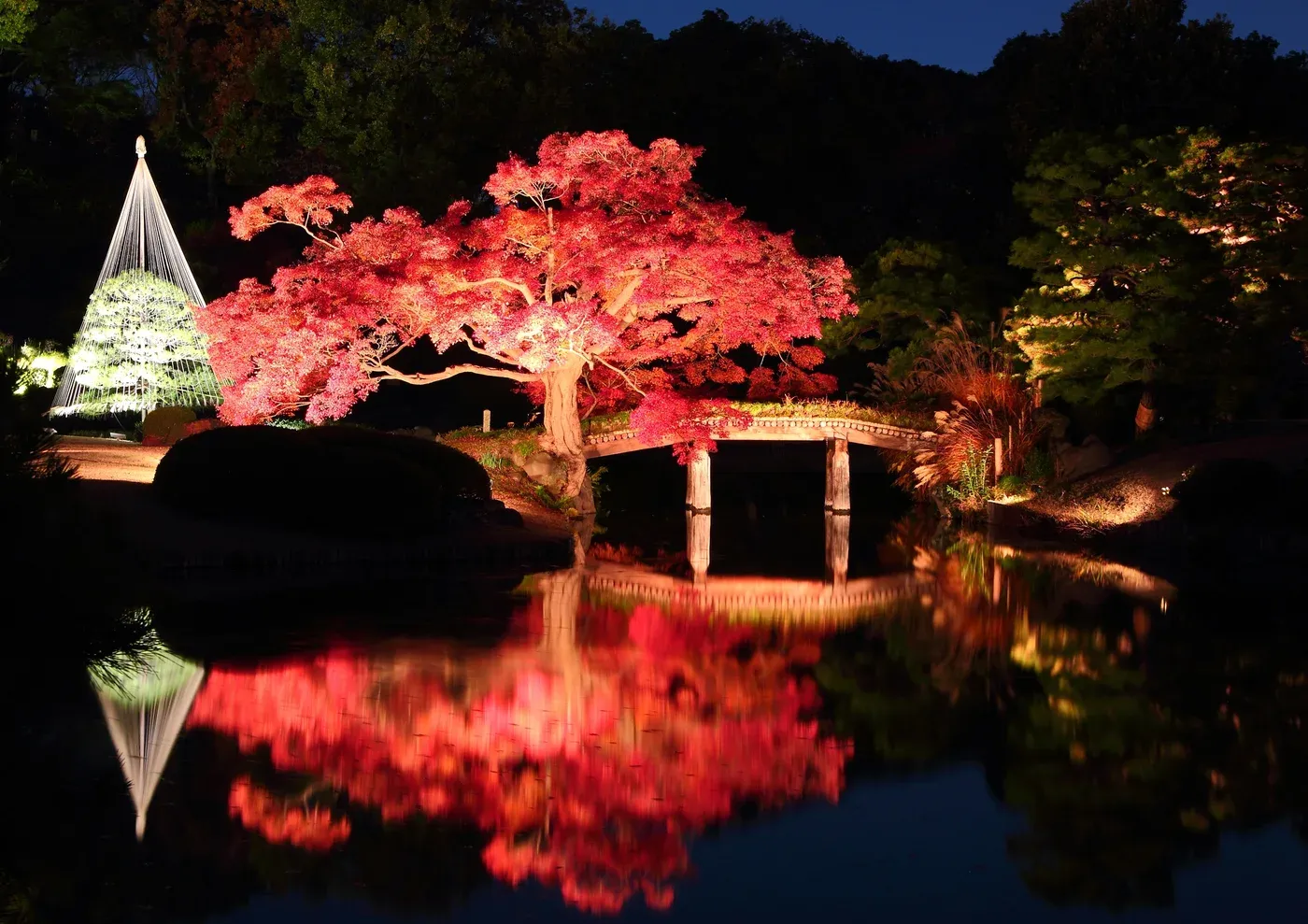
December opens with a brief overlap between autumn and winter, giving early arrivals one last chance to see Tokyo’s foliage before the leaves drop. At Rikugien in Komagome, the Edo-period strolling garden stays open after dark through December 6, bathing Japanese maples and lakeside pines in warm spotlights that mirror across the central pond. The night session is its own ticket, and buying it online is the safer move. It costs less than at the gate, each night has a cap, and the gate only takes cash.
A few miles south in Chiyoda, the Imperial Palace opens its tree-lined Inui-dori avenue to the public through December 6, letting visitors walk a usually restricted stretch of palace grounds framed by golden ginkgos and crimson momiji without needing a prior reservation.
Rikugien’s maples lit at night in December 2014, photographed by Kakidai and shared on Wikimedia Commons under CC BY-SA 4.0.
Tokyo’s Winter Illuminations and European Christmas Markets Through December 25
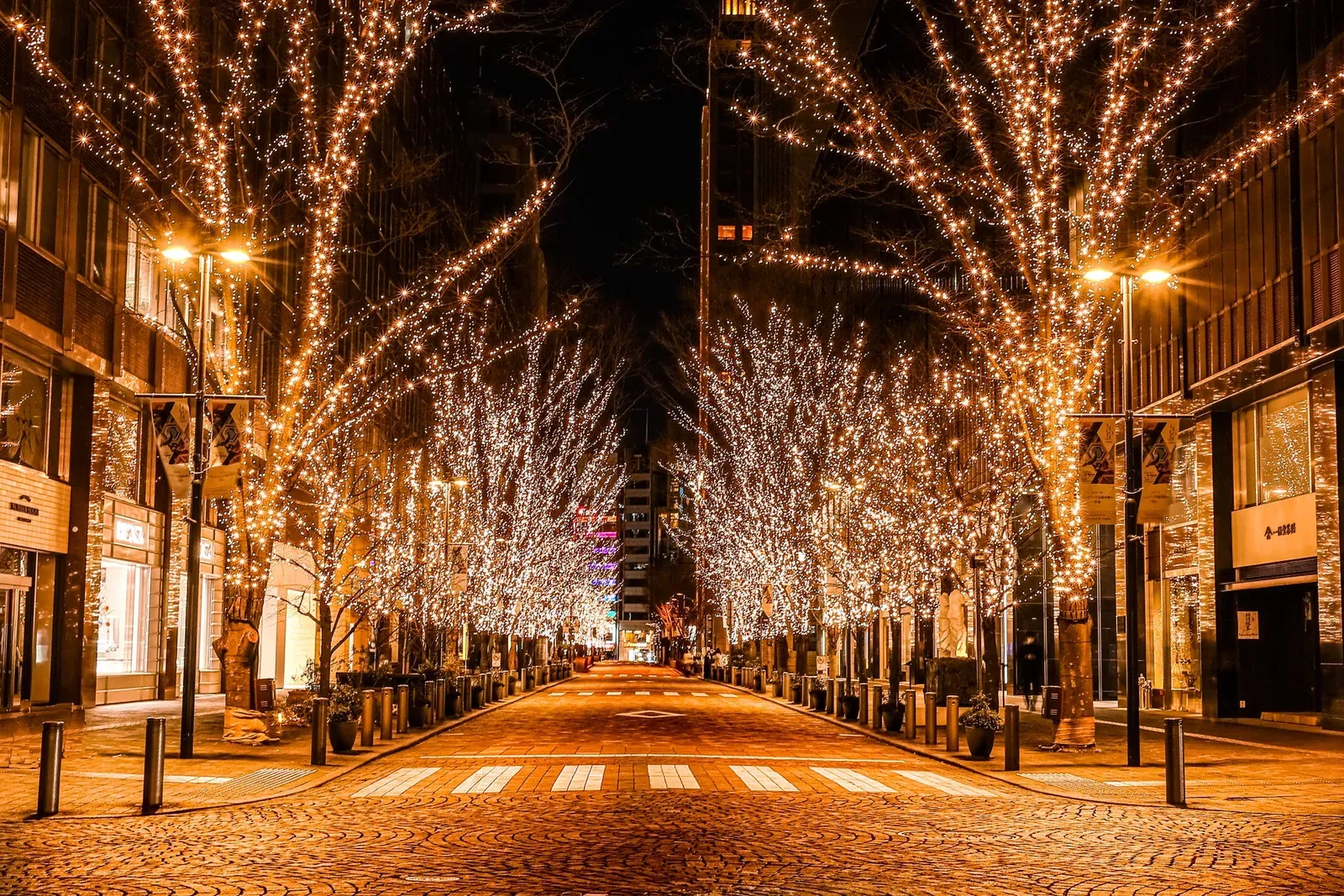
As the last autumn leaves fall, Tokyo’s commercial districts lean fully into winter spectacle through December 25. Along Marunouchi Naka-dori, champagne-gold lights in the street trees turn the avenue beside Tokyo Station into a warm, glowing promenade, while Roppongi Hills pairs its blue-and-white Keyakizaka illumination with a German-style Christmas market serving mulled wine and bratwurst. For distinct neighborhood variations, head to Shibuya’s Ao no Dokutsu for an immersive canopy of cobalt lights, Shiba Park for European market stalls framed directly beneath an illuminated Tokyo Tower, or Gotanda for quieter winter light displays along the Meguro River.
Winter Fireworks Over Odaiba Bay Every Saturday in December
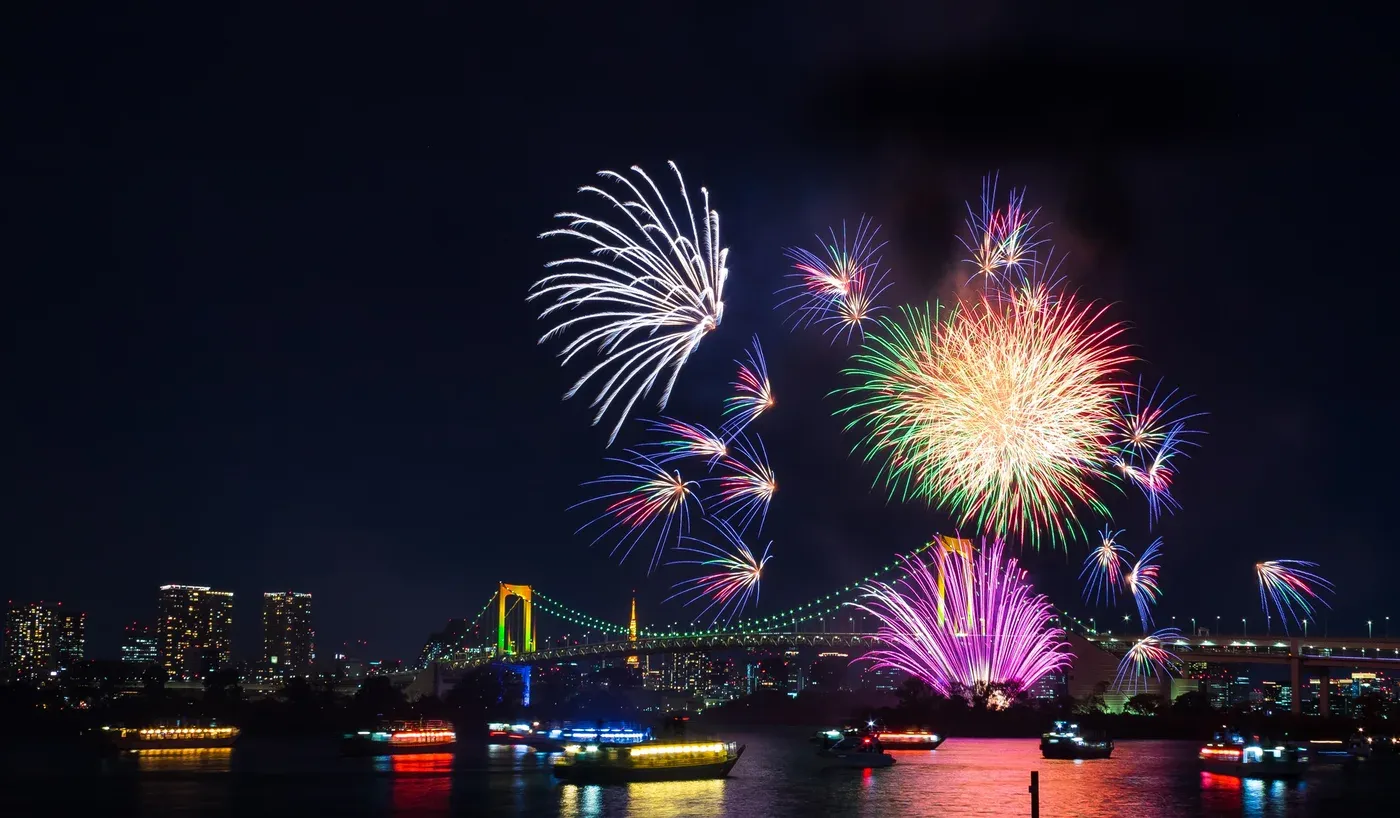
Fireworks in Japan are usually synonymous with humid August nights, which is exactly what makes the Odaiba Rainbow Fireworks feel so striking. They go up at 7pm every Saturday in December, on the 5th, 12th, 19th and 26th, and burst over Tokyo Bay with the Rainbow Bridge and the city skyline glittering behind them. Each show lasts only about five minutes, so bundle up and be on the waterfront by Odaiba’s Statue of Liberty, where they launch from the water, before 7pm. Bad weather cancels the show, so check the page on the day.
The Rainbow Fireworks over Odaiba in December 2016, photographed by Kakidai and shared on Wikimedia Commons under CC BY-SA 4.0.
Raking in Good Fortune at Oji Shrine’s Kumade-ichi on December 6
Shifting from bayfront spectacle to neighborhood tradition, northern Tokyo’s Oji Shrine hosts its annual Kumade-ichi on December 6. Here, vendors line the shrine approach selling kumade, ornate bamboo rakes decorated with gold coins, lucky gods, and treasure ships. These rakes are meant to symbolically "rake in" prosperity and good business for the coming year. Whenever a shopper buys a rake, the stall keepers erupt into tejime, a synchronized, rhythmic hand clapping ritual wishing the buyer good fortune that echoes across the shrine grounds all evening.
Kita ward’s notice for last year’s market gave the hours as about 10am to 9pm, rain or shine. Oji Station is a three-minute walk away and the easiest way to reach the market.
Incense Smoke and Samurai Loyalty at Sengakuji’s Ako Gishisai from December 12 to 14
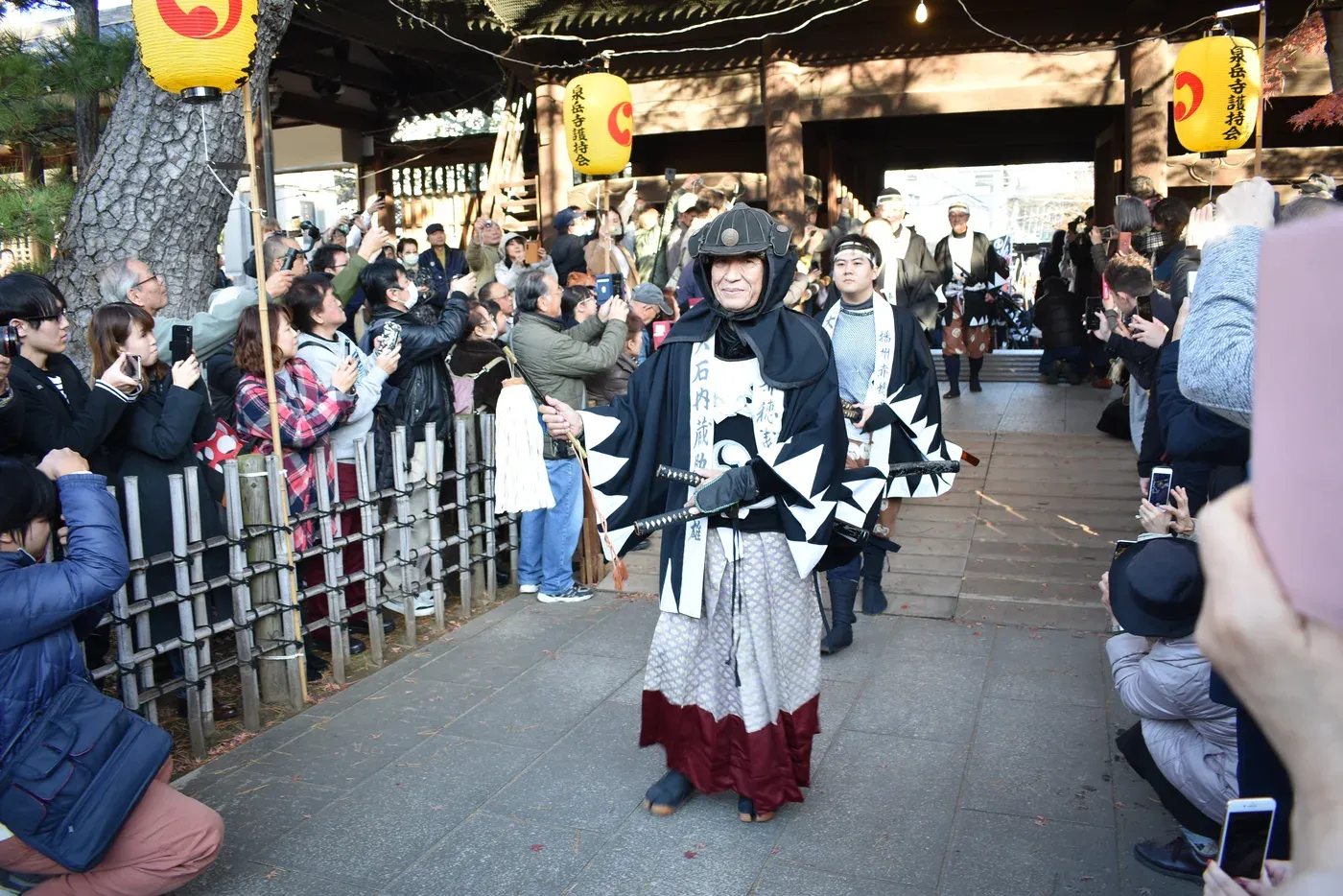
Between December 12 and 14, Sengakuji Temple in Takanawa becomes the focal point of one of Japan’s most famous historical stories, the 47 Ronin. Marking the anniversary of the night the loyal samurai avenged their fallen lord, the 14th day of the 12th month on the old Japanese calendar, Ako Gishisai draws crowds who line up to burn bundles of incense at the warriors’ graves, sending thick clouds of fragrant smoke drifting through the temple courtyard. Around them run memorial services, an evening of court music on December 12, and on the afternoon of December 14 a costumed procession that arrives at the temple gate.
The Gishisai procession arriving at Sengakuji on December 14, 2019, photographed by 江戸村のとくぞう and shared on Wikimedia Commons under CC BY-SA 4.0.
Four Centuries of Street Antiques and Daikan Mochi at Setagaya Boro-ichi on December 15 and 16
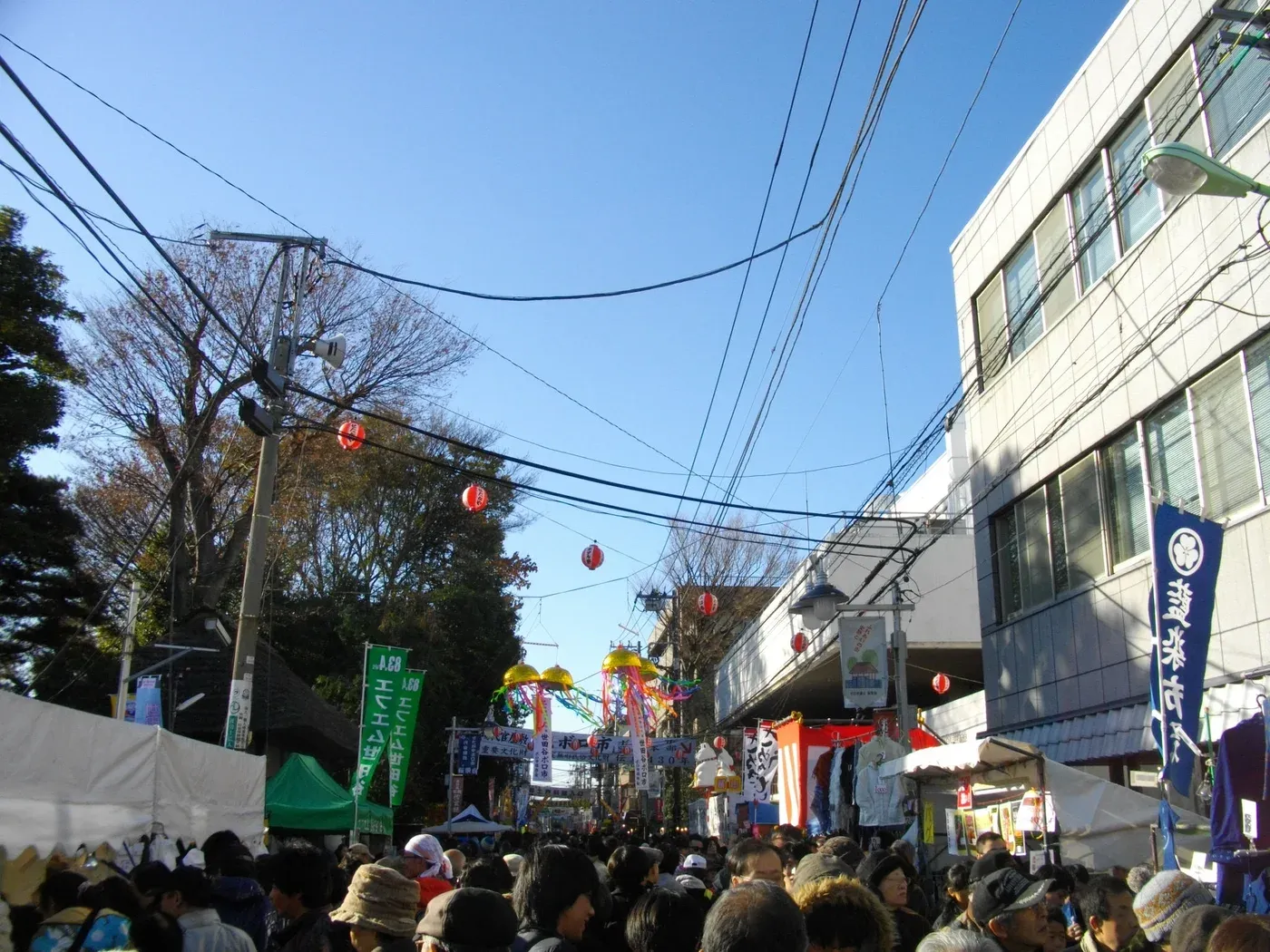
Setagaya’s Boro-ichi traces its roots to 1578, when the warlord Hojo Ujimasa opened a market here free of market taxes. Over the centuries it became a year-end fair, and by the late 1800s it dealt so heavily in used clothing and rags, or boro, that the name stuck. On December 15 and 16, from 9am to 8pm, it transforms a quiet residential street in western Tokyo into a sprawling two-day open-air bazaar, with stalls of antiques, secondhand clothing, everyday goods and plants packing Boro-ichi Street around the old magistrate’s residence. Arrive early in the morning if you want to beat the shoulder-to-shoulder crowds and pick up a box of daikan mochi, the freshly pounded rice cakes sold at the fair. Plan to take them home, since the ward asks visitors not to eat on site where possible and there are no trash cans.
Boro-ichi in December 2012, photographed by Abasaa and shared on Wikimedia Commons in the public domain.
Painted Battledores and Rhythmic Clapping at Senso-ji’s Hagoita-ichi from December 17 to 19
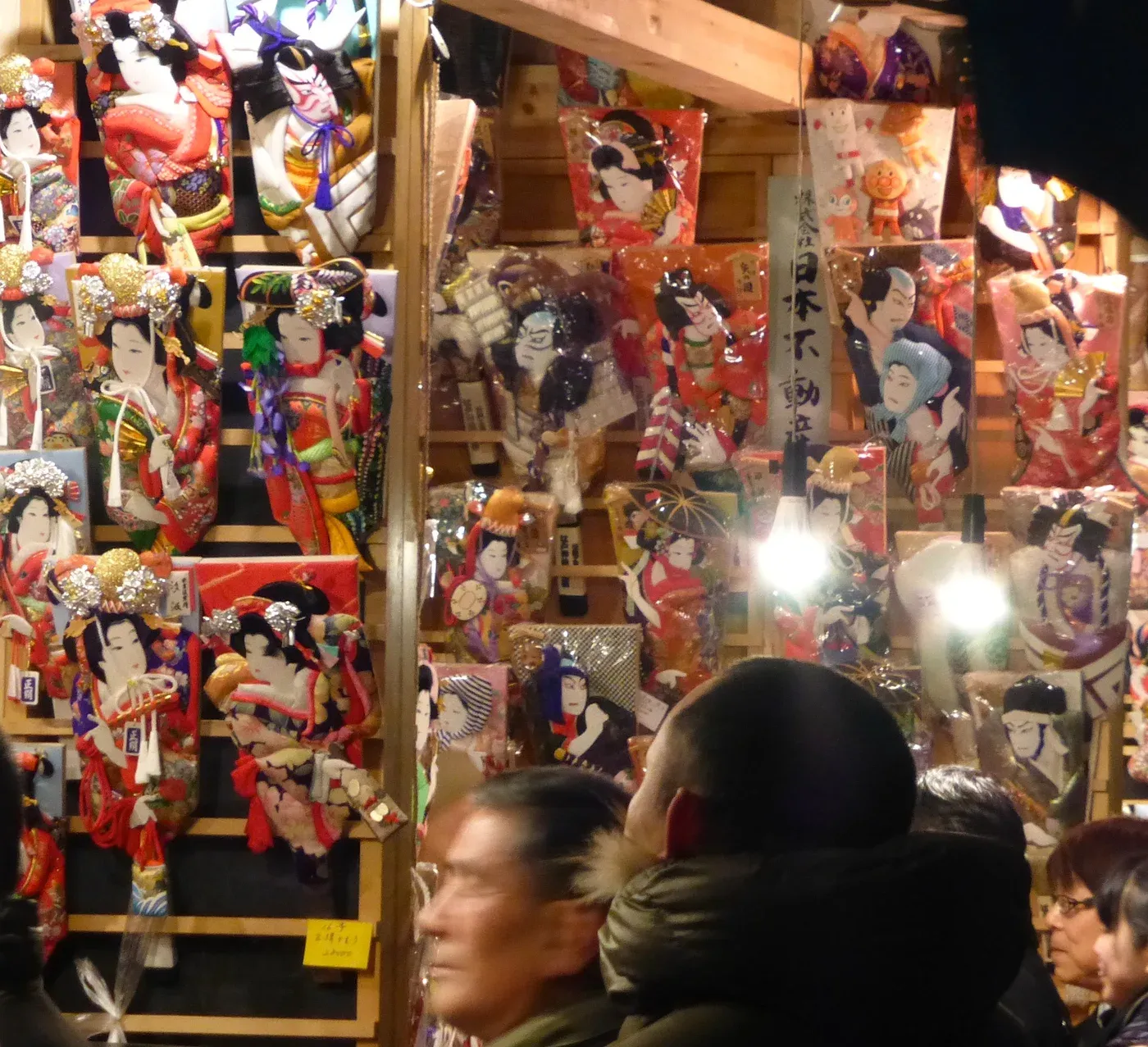
Just as Setagaya winds down, Asakusa’s historic Senso-ji Temple comes alive from December 17 to 19 for Hagoita-ichi, a lively year-end market dating back to the Edo period. Stalls surrounding the main temple hall display hundreds of ornate wooden battledore paddles, or hagoita, originally used in a traditional New Year’s game and now treasured as talismans for swatting away bad luck. Crafted with padded silk portraits of Kabuki actors and contemporary cultural icons, the paddles range from palm-sized charms to towering collector pieces, with every purchase celebrated by bursts of rhythmic clapping from the artisans.
Hagoita stalls at Senso-ji in December 2014, photographed by Nesnad and shared on Wikimedia Commons under CC BY-SA 3.0.
A Closing Fire Ritual at Yagenbori Fudo-in’s Year-End Fair from December 26 to 28
Once the Christmas lights come down, Yagenbori Fudo-in in Higashi-Nihonbashi holds its own toshi-no-ichi, or year-end fair, from December 26 to 28. It is a much smaller, neighborhood affair than the fairs in Asakusa or Setagaya, and its dates are fixed every year. The day to go is December 28, when the temple performs the goma, a large fire ritual, at 3pm and again at 6pm. Both are listed under December on the temple’s events page. It is the last market on this calendar before New Year’s Eve.
Three Days of Peak Otaku Energy at Comic Market 109 from December 29 to 31
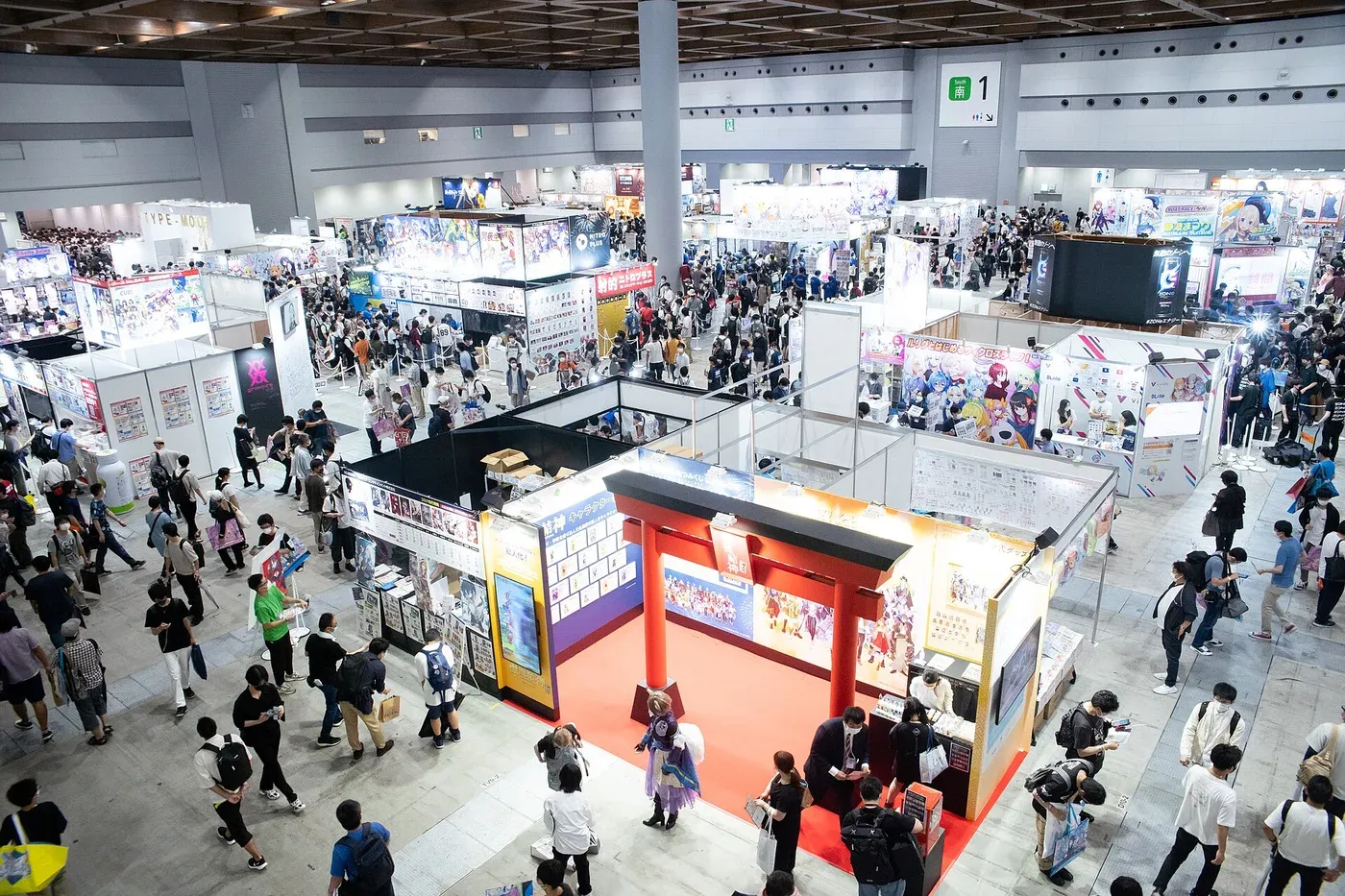
For a completely different kind of year-end pilgrimage, Comic Market 109 (Comiket) takes over Tokyo Big Sight in Ariake from December 29 to 31. As the world’s largest self-published manga and pop-culture convention, it draws hundreds of thousands of creators, collectors, and cosplayers to the waterfront convention center. Entry is tightly controlled, and you will need advance tickets or wristbands, depending on your entry tier, well before you arrive at Ariake. Visitors from outside Japan can buy a morning-entry e-ticket on eplus from December 5, first come.
Ring in the New Year with Temple Bells, Bayfront Fireworks, or the Oji Fox Parade on December 31
On December 31, Tokyo offers three wildly different ways to cross into the new year, depending on the atmosphere you want.
Zojoji Temple (Joya no Kane): Set directly in the shadow of Tokyo Tower, this historic temple strikes its great bronze bell 108 times, once for each of the 108 earthly desires of Buddhist tradition. This year the ringing comes early, running from 9:45pm to about 11pm rather than at midnight, and visitors do the ringing. The temple’s New Year page prices tickets at ¥2,000 each with a souvenir, they go on sale December 1 at 9am, and four ticket holders ring the bell together.
Odaiba New Year’s Countdown: If you prefer a high-energy waterfront celebration, the Tokyo Metropolitan Government’s New Year’s Eve countdown at Odaiba Marine Park lights up the harbor with fireworks and drone shows.
The Oji Fox Parade (Oji Kitsune no Gyoretsu): Back in northern Tokyo, a short walk from where the month’s markets began, around 300 people in fox masks and traditional dress set off around midnight, walking by lantern light from Shozoku Inari Shrine to Oji Inari Shrine. They reenact a legend, pictured in a Hiroshige woodblock print, in which foxes from across the Kanto region gathered on New Year’s Eve to visit Oji Inari. Anyone can apply to walk in it once registration opens.
The Oji Fox Parade setting off just after midnight on January 1, 2025, photographed by Fred Cherrygarden and shared on Wikimedia Commons under CC BY-SA 4.0.
Navigating the Year-End Shutdown from December 21 Through New Year’s Day
Many travelers assume Tokyo operates 24/7 year-round, only to find major cultural landmarks locked behind metal gates during the final week of December. Around December 21, municipal gardens, art museums, and independent restaurants begin staggered closures for nenmatsu-nenshi, the traditional year-end and New Year holiday break. Most museums and gardens are shut from December 29 to 31, and many stay closed into the first days of January.
Rather than treating this as a dead zone, plan around how the city pivots. While galleries and small family-run eateries close so staff can return home, major department stores usually stay open through December 31 to sell elaborate osechi New Year boxes, close on January 1, and reopen on January 2 for hatsuuri, the first sales of the year, and fukubukuro lucky bags.
Meanwhile, Buddhist temples and Shinto shrines hit their busiest stretch of the year, staying open through midnight on December 31 and welcoming millions of visitors from January 1 onward for hatsumode, the year’s first shrine visit. (If you want to watch the first sunrise of 2027 from the Tokyo Skytree observation deck, remember that the advance ticket lottery closes on November 26.)
Before you go
Buy Rikugien Online
Night tickets are ¥1,000 in advance and ¥1,200 on the day, cash only at the gate, and each night is capped. Online buyers also get a priority lane.
Zojoji Bell Tickets Go on Sale December 1
Tickets are ¥2,000 each and go on sale at 9am at the temple office. The ringing ends around 11pm, well before midnight.
Stack the Middle of December
Gishisai, Boro-ichi and Hagoita-ichi run on consecutive days from December 12 to 19, so one week covers all three.
Use 7-Eleven ATMs
They take foreign Visa and Mastercard around the clock, maintenance aside, which helps once banks close for the holidays.
Places Mapped
11 places. Select a pin to jump to it.
1
Rikugien Gardens
六義園
6-chōme-16-3 Honkomagome, Bunkyo City, Tokyo 113-0021, Japan
The shrine stands at one end of the Oji Fox Parade route.
Common questions
Is Tokyo busy or closed between Christmas and New Year?+
Both, depending on where you go. Museums and gardens start closing from December 21, and most of those named here are shut from December 29 to 31, while temples get busy toward New Year’s Eve. Comiket fills Tokyo Big Sight on the same three days.
Where can I ring a temple bell on New Year’s Eve?+
Zojoji sells a limited number of tickets at ¥2,000 each from December 1 at 9am, and its ringing runs from 9:45pm to about 11pm. Ikegami Honmonji’s events page lists 600 numbered tickets handed out from 11pm, first come. At Senso-ji the public does not ring the bell.
Is there a New Year’s Eve countdown in Tokyo?+
Yes. The Tokyo Metropolitan Government holds one at Odaiba Marine Park with fireworks and drone shows, and its schedule is due in late November. Shibuya’s countdown plans for 2026 have not been announced.
Are there fireworks in Tokyo in December?+
Yes. Odaiba’s Rainbow Fireworks run for about five minutes at 7pm on December 5, 12, 19 and 26, and bad weather cancels them. The Odaiba countdown on New Year’s Eve also has fireworks.
What is open on January 1?+
The Tokyo National Museum (noon to 8pm), the Metropolitan Government Building observation decks (free, 7:30am to 5:30pm), teamLab Planets (8am to 8pm) and Tokyo Skytree from 8am.
Which December markets are free?+
The Roppongi Hills Christmas Market and Hagoita-ichi at Senso-ji are free to walk into, and so is Sengakuji during Gishisai, though the temple asks ¥500 for incense at the graves. Both Tokyo Christmas Market sites charge entry, from ¥1,000.